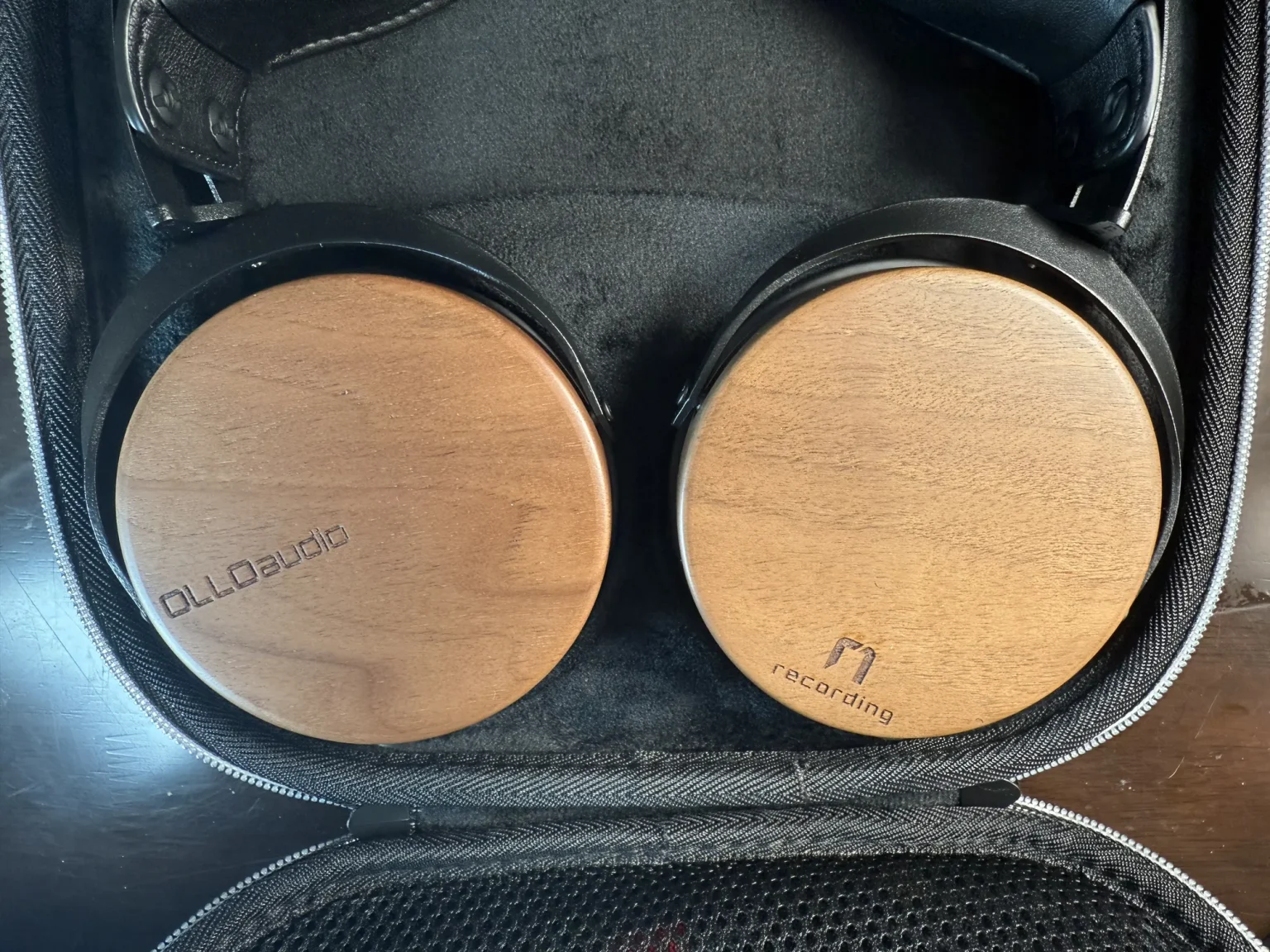
I already owned the well-regarded X1. When existing X1 owners were given early access to buy the R1, I decided to jump in and find out for myself.
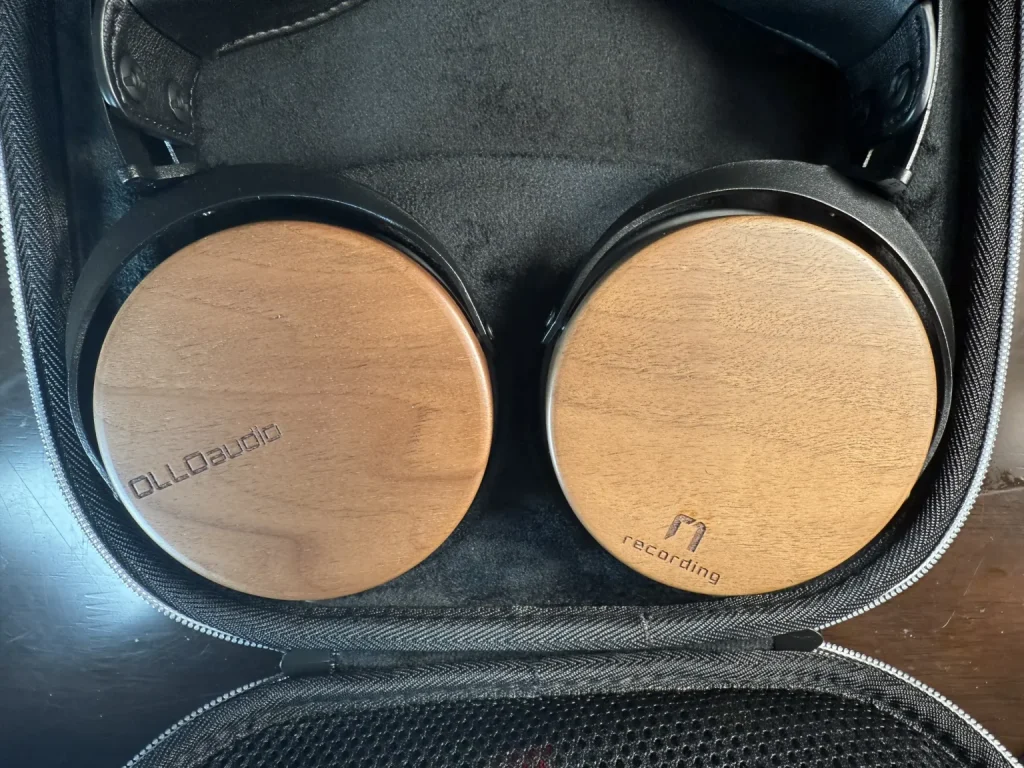
The R1 presents transients clearly, which makes rhythm easy to follow. For that reason, I found it excellent as a monitoring headphone for performers.
Its overall sound direction resembles the X1, so it retains the clear presentation that makes it easy to immerse yourself in a performance. My favorite quality is the high level of isolation. The R1 is also a useful choice when you need to concentrate on sound in a noisy environment.
Who should buy the R1?
- Anyone looking for high-quality closed-back headphones.
- Anyone recording vocals who wants to keep sound leakage to an absolute minimum.
- Anyone who needs to focus on sound in a noisy environment.
- Anyone for whom isolation is a priority.
Who may not need the R1?
- Anyone who already owns closed-back headphones costing more than 100,000 yen.
- Anyone who already owns the OLLO X1.
Price at the time of pre-order
The pre-order price was $406, or roughly 64,200 yen at the exchange rate at the time. I also paid 5,100 yen in import duty upon delivery.
The expected regular Japanese retail price was around 79,200 yen, so the early price was only a little lower. The weak yen was painful.
Build and design
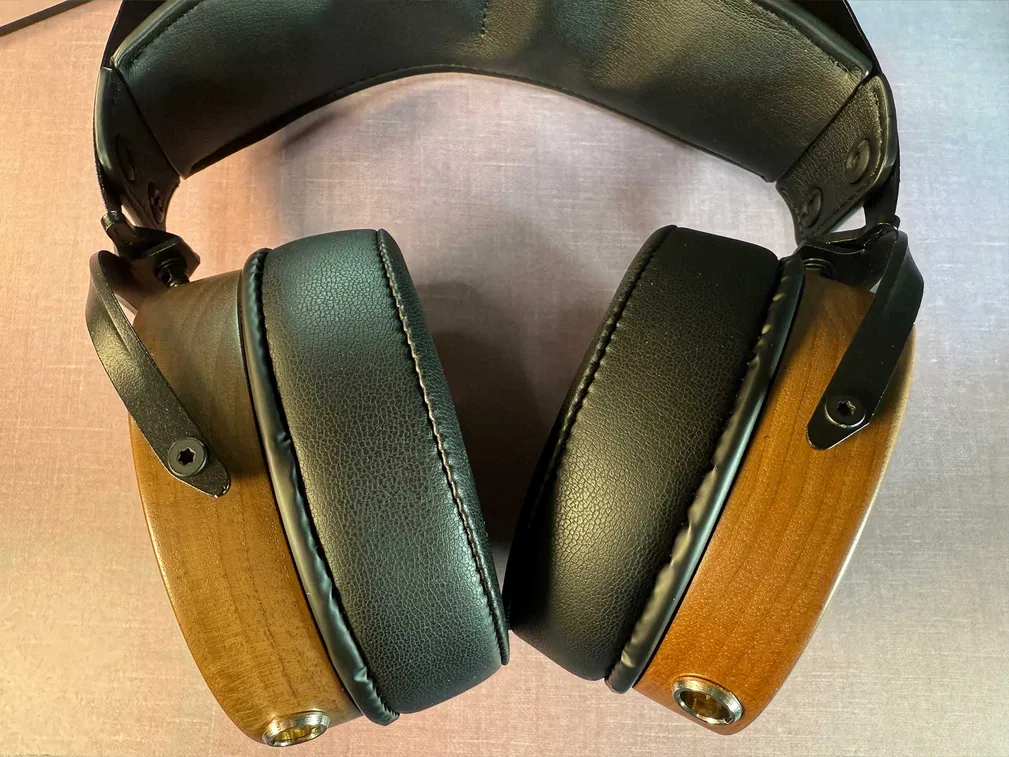
The ear pads do not rotate all the way around; they turn about 90 degrees. The headband is wide. I have a fairly large head, but the R1 fit without a problem.
The headphone cable uses a mini-XLR connector. That is a rather specialized connection, so finding a replacement cable may take some effort. I was left wondering how many off-the-shelf mini-XLR replacement cables are actually available.
Isolation and closed-back feel
The isolation is extremely strong when the headphones are on. It feels almost as if active noise cancellation were working.
- Ambient sound and bleed are reduced by 50% (-10 dB SPL).
During normal computer work, I sit about one meter away from a running PC. Fan noise that I could previously hear clearly became almost inaudible. The sound of the air conditioner in the room was also reduced dramatically.
That makes the R1 extremely useful when concentration matters. I own an older Bose noise-cancelling headphone, and the R1 seemed to block out even more environmental sound than that model.
The R1 has large ear pads that fully surround the ears. I never felt that my ears were being pinched or becoming painful. Anyone who has avoided headphones because ear pads press uncomfortably against the ears may find the fit especially appealing.
That said, the R1 has slightly more clamping force and more weight than the X1, so I expect longer sessions to fatigue the neck. I can wear the X1 for three or four hours. Compared with the comfort of the X1, I found extended use with the R1 more demanding. Open-back headphones are unquestionably easier on the ears during long sessions.
Sound quality
Now for the important part: sound quality.
I felt that the R1’s U-shaped frequency response requires some adjustment before using it for mix decisions.
The ear cups are made from American walnut. Whether that material contributes or not, snare hits sound very tight and satisfying. Tracks built around percussion, or songs where a full drum kit pushes the rhythm forward, become exciting to listen to.
Compared with the X1, the R1 does not reproduce the same bright, fizzy top end, which makes the lower range easier to understand. The X1’s high frequencies are extremely beautiful. The R1 can sound more closed-in by comparison because it is a closed-back design, but I did not feel that rock-oriented material lacked high end. There is still more than enough top-end information.
To put it simply: choose the X1 when you want to hear the high end in detail. Choose the R1 when you want to feel the impact of a kick drum close to your ears. That was about the size of the difference I heard.
You can hear the difference when repeatedly switching between the two headphones. When listening to either model on its own, though, the gap in sound quality did not feel especially large. As a closed-back headphone available below 100,000 yen, the R1 is very capable.
Both the R1 and X1 make it easier to notice roughness in my own playing and sounds that need attention during mixing. That part did not change between the two models.
For casual music listening, I would choose the X1 for classical music and the R1 for hard rock or EDM. If controlling leakage to the outside world matters, the R1 is the clear choice. In terms of sound quality alone, however, I did not feel a need to own both models if I already had one of them.
The R1 is more immediately fun for listening to music. The X1 makes mix flaws easier to find. That seems like a practical way to divide their roles.
Product specifications
| Item | Specification |
|---|---|
| Style | Closed-back, over-ear |
| Frequency response | 5 Hz – 22 kHz; 1/3-octave sweep, 13.4 dB SPL peak-to-peak range, +/- 1 dB |
| Sensitivity | 110 dB SPL at 1 kHz RMS, 3 dB at 0 dBu |
| Impedance | Approximately 32 ohms |
| Driver | 50 mm dynamic driver |
| Magnet | Neodymium |
| Diaphragm composite | PU + PET patented pattern |
| THD / second harmonic | <0.12% / <0.05% at 94 dB SPL, 1 kHz |
| Ear-pad diameter, inner / outer | 60 mm / 100 mm |
| Ear-pad material | Acoustic foam with artificial leather |
| Ear-cup material | American walnut |
| Headband material | Stainless steel and silicone |
| Cable | Detachable 2 m Y-type mini-XLR cable |
| Connector | 3.5 mm jack, with a 6.3 mm adapter included |
| Calibration | No unit-specific calibration support |
| Weight, without cable | 386 g / 0.8 lb |
About OLLO Audio
OLLO Audio is a headphone maker from Slovenia. The company is known among DTM users and engineers for studio-monitoring headphones designed to support reliable mixing and mastering decisions.
The brand’s original idea came from the need to mix at home at night without waking family members: create headphones that allow decisions closer to those made with studio monitors.
The walnut-and-metal appearance feels tactile and analogue, while the design goal is modern and practical: clear, controlled monitoring rather than exaggerated listening-fi sound.
Why DTM users choose OLLO Audio
OLLO Audio differs from many premium listening headphones because it is designed around becoming a dependable point of reference during production.
- Moving between speakers and headphones: The aim is to reduce the gap between what you hear on studio monitors and what you hear on headphones. This can help prevent translation failures: a mix that seems balanced on headphones but falls apart on speakers.
- Fit for long studio work: The ear pads and clamping force are intended for production sessions, though individual comfort will always differ.
- Serviceability: The design is intended to support replacing parts and keeping the headphones in use for a long time.
Main models in the range
| Model | Primary role | General character |
|---|---|---|
| S4X | Stereo mixing and mastering | Open-back, direct and honest presentation for regular music production |
| S5X | Immersive and binaural production | Open-back design with a wider, more spacious presentation |
| S4R | Recording monitoring | Closed-back design intended to reduce leakage during recording, including vocal sessions |
Final thoughts
If you struggle to judge low-end quantity on your current headphones or lack confidence in your mixes, OLLO Audio can be worth considering. For a neutral and dependable production reference, the open-back models are especially attractive.
The R1 takes a different role. It offers strong isolation, low leakage, a rhythm-friendly presentation, and an engaging way to listen to kick-driven music. It is not merely a closed-back version of the X1. It is a practical monitor for recording, focused work, and performance situations where the outside world needs to stay out.